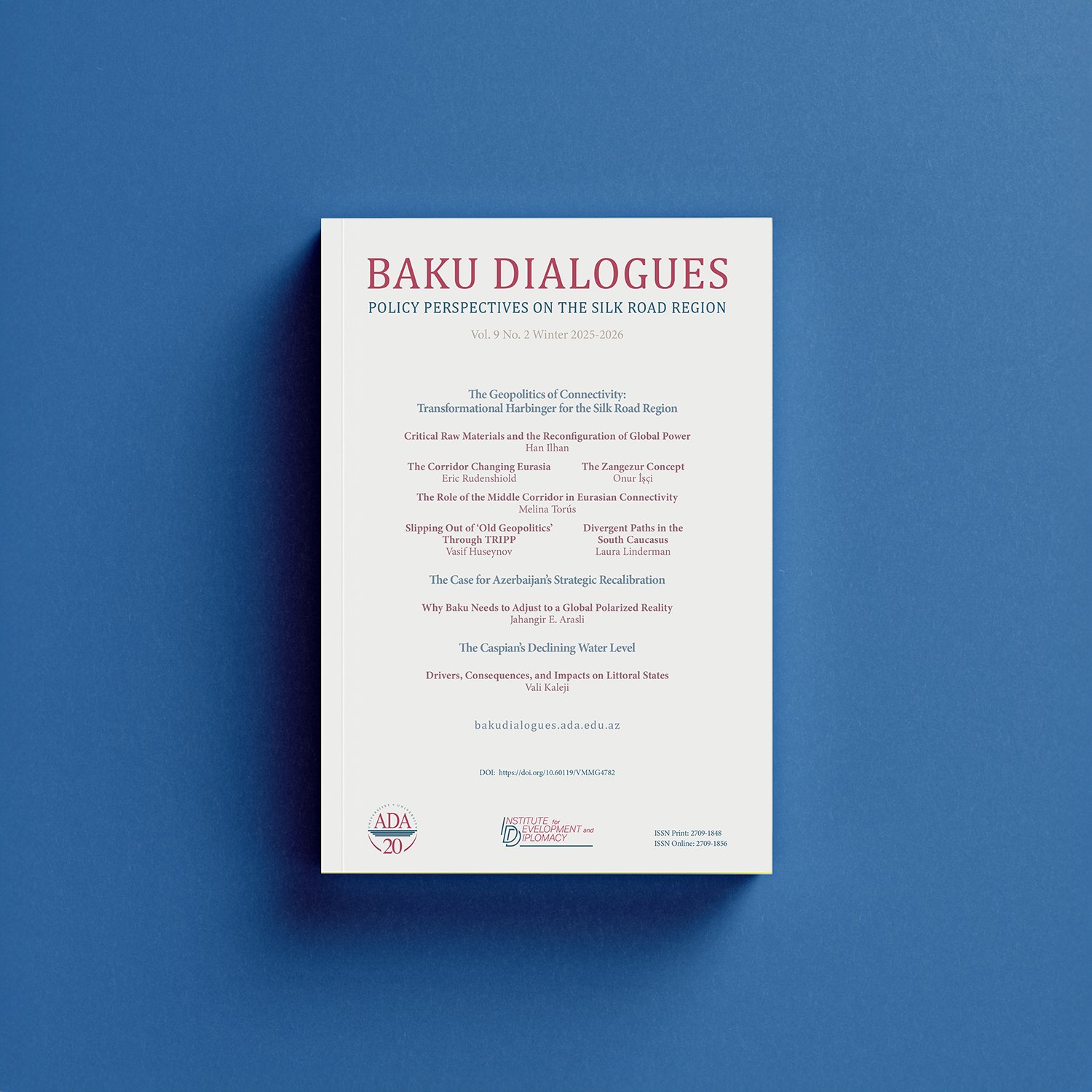
From Conflict Zones to Supply Chain Zones: Critical Raw Materials and the Reconfiguration of Global Power
The international system is entering a period of heightened fragmentation and strategic realignment. Economic security, supply chain resilience, and industrial competitiveness are increasingly central to national strategy. Within this evolving landscape, critical raw materials (CRMs) have moved from the margins of industrial policy to the center of geopolitical and geo‑economic planning.
CRMs have moved from the margins of industrial policy to the center of geopolitical and geo‑economic planning.
CRMs are foundational not only to the energy “transition,” but also to advanced manufacturing, digital infrastructure, aerospace systems, and defense technologies. Their strategic relevance derives from both their functional indispensability and the concentration of processing capacity within a limited number of jurisdictions.
In several key mineral value chains, supply exposure remains highly concentrated, resulting in vulnerabilities for advanced economies whose industrial bases depend on secure and predictable access. As a result, diversification of supply has become a policy priority across multiple demand‑side economies.
Yet the implications of CRMs extend beyond industrial competitiveness. The geography of CRM production and processing intersects with regions historically shaped by political tension, limited economic integration, and uneven development. As global supply chains are reconfigured, CRMs have the potential either to reinforce geopolitical rivalry or to anchor new forms of economic interdependence.
Whether CRMs become instruments of intensified competition or foundations of structural stability will depend not only on resource endowment, but on the architecture of cooperation between supply‑side and demand‑side economies. The defining question is therefore not simply who controls resources, but how capital, technology, and long‑term strategy are aligned around them.
Understanding the evolving global CRMs landscape requires examining both the policy responses of advanced economies and the institutional models that have shaped the current concentration of supply.
The Grand American Pivot
Beyond trade leverage, the United States has increasingly activated direct financing and institutional mechanisms to accelerate CRMs supply chains, particularly in areas where private capital has historically been reluctant to engage at early stages due to long development timelines, permitting complexity, and commodity‑cycle volatility. In other words, the United States is now seeking to pursue a policy of strategic pragmatism in critical raw materials.
The foregoing reflects growing recognition that concentrated processing capacity in a limited number of jurisdictions has created structural supply exposure that market forces alone may not correct. The United States has undertaken five concrete actions in this regard.
First, the increased utilization of the Defense Production Act (DPA) in support of domestic and allied CRM supply chains. In recent years, what are called DPA Title III authorities have been applied to fund feasibility work, processing capacity expansion, and selected early‑stage development activities across certain critical mineral categories. While the DPA does not replace private investment mechanisms, its use signals institutional willingness to participate in earlier risk phases where strategic considerations extend beyond short‑term financial returns.
Second, the Department of Energy (DOE), through its Loan Programs Office (LPO) and related critical materials initiatives, has expanded engagement in battery supply chains and mineral processing projects. This reflects a willingness to consider large‑scale, capital‑intensive facilities that private markets have traditionally viewed as high‑risk due to extended payback periods and exposure to price volatility. Such engagement suggests that long‑duration industrial capacity may require public participation to reach financial close.
Third, strategic stockpiling. On 2 February 2026, the U.S. Export–Import Bank (EXIM) announced financing support for an initiative referred to publicly as “Project Vault,” positioned as a strategic critical minerals reserve concept combining EXIM backing with private‑sector participation. While operational parameters continue to evolve, the initiative indicates acknowledgment that market supply alone may not guarantee resilience in strategically sensitive CRM value chains. Strategic stockpiling, whether above‑ground reserves or structured buffering mechanisms, has re‑entered policy discussion as part of resilience planning.
Fourth, heightened partner engagement and coordinated frameworks. In early February 2026, the United States launched the Forum on Resource Geostrategic Engagement (FORGE) as a partner‑facing framework intended to coordinate policy, trade tools, and project‑level cooperation among aligned economies in CRM markets. Rather than relying solely on bilateral project engagement, this initiative reflects movement toward structured coordination across multiple demand‑side jurisdictions.
Emerging discussions within this evolving policy toolkit have included consideration of mechanisms such as minimum import price concepts or coordinated price floor approaches designed to counter market distortions and improve project bankability in non‑dominant supply chains. These concepts remain under discussion rather than fully implemented instruments, but their presence in policy debate reflects recognition that capital formation in CRMs may require market‑structuring tools in addition to financing support.
Taken together, these actions represent a meaningful shift in the U.S. approach. CRMs are increasingly treated not solely as industrial inputs, but as strategic assets requiring coordinated public and private capital deployment. This evolving model establishes a reference point for other demand‑side economies, particularly in Europe and parts of Asia where diversification ambitions will likely require comparable risk‑sharing mechanisms and capital architecture if they are to translate policy intent into executable supply chain outcomes.
A fifth development is the emergence of blended capital platforms combining public, sovereign, and private investment. Here are two recent examples. One, in January 2025, Abu Dhabi’s sovereign investor ADQ and Orion Resource Partners (Orion) announced a 50/50 Abu Dhabi‑based joint venture with an initial commitment of approximately $1.2 billion over four years to invest in strategic metals and CRMs globally. Two, in October 2025, the U.S. International Development Finance Corporation (DFC) joined ADQ and Orion to establish the Orion Critical Mineral Consortium (Orion CMC) with initial capital commitments totaling approximately $1.8 billion, targeting investments in CRM projects across DFC‑eligible jurisdictions to strengthen supply chains for the United States and allied markets.
These platforms illustrate an evolutionary trend in capital structuring: public capital can absorb portions of early‑stage risk, private capital contributes financial discipline and structuring capability, and sovereign capital introduces long‑term strategic alignment.
However, structural tensions remain. In many blended vehicles, traditional private capital underwriting standards continue to influence project sequencing. Projects are often expected to demonstrate advanced engineering work, substantial technical and ESG derisking consistent with international standards, established execution capacity, and near‑construction readiness prior to major capital commitment.
Particularly in emerging CRM supply‑side regions, this sequencing can create bottlenecks. If full derisking is required before strategic capital participates, deployment slows. In a sector characterized by multi‑year development cycles and capital intensity, delay compounds disadvantage. Strategic competition in CRMs may therefore require calibrated earlier‑stage public participation within blended capital structures, where the pace of capital engagement becomes as important as the volume of capital available.
The China Benchmark
Any discussion of CRM diversification must begin with a clear understanding of the structural model that has shaped current supply concentration. Over the past three decades, China has developed dominant positions across multiple critical mineral processing chains.
Any discussion of CRM diversification must begin with a clear understanding of the structural model that has shaped current supply concentration.
While geological endowment plays a role, the more significant differentiator has been its deliberate construction of integrated industrial ecosystems spanning upstream extraction, midstream processing, downstream manufacturing, and supporting infrastructure.
China’s advantage rests on five interlocking pillars.
First, patient, state‑directed capital. A defining feature of China’s approach has been the alignment of state‑directed capital with long‑term industrial strategy. State‑owned enterprises, policy banks, and state‑aligned financial institutions have participated across multiple stages of project development, including phases that private capital in other jurisdictions often considers premature or high‑risk.
This model has enabled earlier entry into projects, absorption of geological and engineering risk, and sustained investment through commodity cycles. Rather than relying solely on market timing, capital deployment has often been linked to long‑term strategic positioning objectives.
Second, midstream and downstream industrial depth. China’s strength is most visible in processing and manufacturing capacity. Across several CRM value chains, it has established substantial refining and component production capabilities, supported by scale efficiencies, accumulated technical expertise, and operational experience.
Processing concentration creates structural leverage. Upstream production in other jurisdictions frequently depends on Chinese refining and intermediate manufacturing capacity. Over time, this has reinforced network effects that are difficult to replicate quickly.
Third, long‑term resource positioning. In addition to domestic capacity, Chinese entities have participated in resource development projects globally over extended time horizons. In certain mineral categories, this has included investment in or acquisition of assets outside China even where domestic reserves exist.
For example, in the tungsten sector, where China remains a leading producer and processor, Chinese firms have also engaged in overseas asset acquisition and project participation. This reflects a strategic logic that extends beyond immediate supply needs, emphasizing diversification, optionality, and long‑term positioning.
While advanced economies have recently focused on building “above‑ground stockpiles” to buffer short‑term supply risk, China has effectively pursued what might be described as “below‑ground stockpiling”, securing ownership stakes or long‑term participation in mineral assets internationally to reinforce future supply optionality. The distinction reflects differing conceptions of supply security; one centered on inventory buffers, the other on structural asset positioning.
Fourth, emphasis on developing top‑notch homegrown human capital and execution capacity. Sustained investment over decades has also produced accumulated technical knowhow, engineering depth, and execution experience. The ability to mobilize technical teams, deploy processing expertise across jurisdictions, and manage complex project pipelines has become a structural advantage that compounds over time.
And fifth, setting its own strategic timeframes. Advanced economies are currently operating under heightened urgency. Strategic stockpiles are being expanded, trade tools are being refined, and new financing vehicles are being created to accelerate diversification. These measures are rational responses to concentrated supply exposure, yet they are primarily oriented toward mitigating immediate vulnerability.
China’s approach is a structural contrast that illustrates a different time horizon. It has simultaneously reinforced existing industrial positions while positioning for future optionality through sustained investment in assets, processing ecosystems, and technical capability. The distinction is not merely financial; it reflects the institutionalization of long‑term strategy.
A further dimension of China’s model is consistency of engagement. Long‑term capital deployment has been accompanied by sustained institutional relationships, continuity of strategic intent, and high‑level engagement across political cycles. In capital‑intensive sectors measured in decades, perceived reliability and consistent deliverability reinforce trust, which in turn lowers political and commercial friction. Industrial ecosystems do not mature on capital alone; they mature on continue.
Competing effectively therefore requires more than matching policy announcements or capital volumes. It requires alignment of strategic timeframes. CRM strategies constrained by short‑term political and financial cycles will struggle to compete with approaches measured in decades. In this context, the decisive variable is not geology alone, nor capital alone, but the capacity to sustain industrial strategy long enough for ecosystems and capabilities to mature.
From Transport to Industrial Corridors
If the global competition in CRMs is ultimately structural, its implications are most visible in regions where geology, geography, and geopolitics intersect, such as Central Asia and the South Caucasus—that is, what the editors of Baku Dialogues refer to as the Silk Road region.
Much of the conversation across this part of the world has focused on transport corridors, such as rail links, road networks, energy pipelines, and logistics routes connecting Europe and Asia. Shipping raw concentrate through a corridor generates transit revenue, but this alone does not transform economic structure. Processing and manufacturing within a corridor generate industrial transformation. This distinction matters profoundly in a fragmenting geopolitical environment.
In the context of CRMs, an industrial corridor integrates upstream mining, midstream refining and metallurgical processing, downstream component and alloy production, reliable energy infrastructure, industrial parks and specialized zones, harmonized regulatory and ESG frameworks; and cross‑border customs coordination.
Industrial corridors anchor long‑term capital, create employment multipliers, attract research institutions, expand local tax bases, and embed skills within the region rather than exporting value externally.
None of this, however, is possible without predictability, and predictability requires peace. Three aspects of this require elaboration: transport corridors and their limits, industrial corridors as economic transformation, and peace as economic infrastructure.
One, transport corridors are necessary components of regional integration. They reduce friction, increase trade flows, and generate transit revenue. However, transit alone does not fundamentally transform economic structure. Moving raw materials across borders captures limited value relative to processing, refining, and manufacturing those materials within the region itself.
The strategic question is therefore not only how goods move through a corridor, but what economic activity is anchored along it.
Two, an industrial corridor extends beyond logistics infrastructure. For CRMs, it integrates upstream mining, midstream processing, downstream component production, energy systems, industrial parks, research institutions, and harmonized regulatory frameworks. Industrial corridors embed production capacity within a region’s economic architecture.
Unlike transport corridors, industrial corridors anchor long‑term capital. They generate employment multipliers, stimulate skills development, expand local tax bases, and create ecosystems of suppliers and service providers. Capital‑intensive facilities such as refineries and metallurgical plants require stable operating environments measured in decades rather than short political cycles.
For regions rich in CRMs, industrial corridors provide a mechanism to convert geological potential into sustained economic value.
And three, industrial corridors cannot function without political stability and predictable cross‑border relations. Recent developments across the Silk Road region speak to this point directly.
In parts of Central Asia, the normalization of border arrangements and improved bilateral cooperation are starting to unlock economic opportunity. Agreements clarifying border demarcation and facilitating cross‑border trade have reduced friction and enabled expanded economic interaction. While such processes remain dynamic and evolving, they demonstrate how stability directly enhances connectivity and investment attractiveness.
In the South Caucasus, efforts toward normalization and structured dialogue following prolonged conflict similarly hold economic significance. Infrastructure projects, energy interconnections, and industrial investments depend on predictability. Without stability, capital hesitates. Without capital, industrialization slows.
The relationship between peace and connectivity is therefore structural rather than rhetorical. Political tension increases transaction costs, deters long‑term investment, and fragments supply chains. Stability lowers perceived risk, reduces financing costs, and enables cross‑border industrial integration.
For CRM‑producing regions, this dynamic is decisive. If upstream resources are to supply processing hubs and manufacturing clusters across borders, infrastructure must operate continuously, and regulatory regimes must remain predictable. Industrial corridors transform geography into advantage only when peace reduces the probability of disruption.
In this sense, peace functions as economic infrastructure. Without stability, connectivity weakens. Without connectivity, the bridge between supply‑side potential and demand‑side necessity cannot be constructed effectively.
A Coordinated Supply‑Side Platform
If industrial corridors depend on peace and connectivity, they also depend on coordination across borders. The two parts of the core Silk Road region—the South Caucasus and Central Asia—possess complementary strategic strengths that, if aligned, could significantly reshape their role in global critical raw materials supply chains.
If industrial corridors depend on peace and connectivity, they also depend on coordination across borders.
Central Asia holds substantial upstream resource potential across multiple critical mineral categories. The South Caucasus occupies a pivotal geographic and diplomatic position linking regional production to European and global markets. Individually, the states belonging to these two parts of a single regional whole compete for investment and bilateral partnerships. Collectively, however, they have the potential to represent meaningful scale.
Scale is decisive in capital‑intensive industries such as mining and processing. Isolated projects in fragmented jurisdictions often struggle to attract long‑term strategic capital. Processing facilities require predictable feedstock volumes to justify investment. Infrastructure projects demand cross‑border continuity and regulatory coordination. Offtakers seek supply reliability measured in decades rather than political cycles.
A coordinated supply‑side strategy would therefore extend beyond individual project promotion. It would involve cross‑border alignment of upstream development pipelines, shared or regionally synchronized midstream processing hubs, harmonized regulatory and ESG standards to reduce investor friction, coordinated infrastructure planning across transport and energy systems, and structured regional engagement with global capital markets and strategic partners.
Such coordination reduces perceived risk by creating scale, regulatory consistency, and infrastructure continuity across jurisdictions. As risk perception declines, the cost of capital correspondingly decreases, improving project viability and accelerating development timelines. These effects are material rather than incremental in capital‑intensive industries, where financing conditions often determine project feasibility.
Beyond financing considerations, coordination strengthens negotiating leverage. When supply‑side countries engage independently, they negotiate from the position of individual asset holders. When they operate within a coordinated regional platform, they present aggregated volume, diversified geology, and integrated logistics. This materially enhances their strategic position in discussions with global investors, offtakers, and demand‑side governments seeking diversified supply.
Coordination also reinforces stability within the region itself. Cross‑border infrastructure, shared processing facilities, and synchronized industrial development create economic interdependence among neighboring states. Interdependence increases the economic cost of disruption and strengthens incentives for sustained cooperation, thereby aligning industrial strategy with regional stability objectives.
For global demand‑side economies seeking diversification away from concentrated supply chains, such a coordinated platform would offer scale combined with predictability. The opportunity for the countries that make up the core of the Silk Road region is therefore not merely to supply minerals, but to position themselves as an integrated, reliable, and strategically organized diversification alternative.
The distinction between isolated resource development and coordinated supply architecture is the distinction between passive participation in global markets and the ability to shape them.
Industrialization as Stabilization
Coordination alone is insufficient if development remains confined to extraction. Resource extraction alone rarely produces durable economic transformation. While upstream mining generates revenue and employment, countries that remain confined to exporting raw materials often experience limited value capture and heightened exposure to commodity price volatility.
When concentrates leave a country unprocessed, the majority of economic value, such as refining margins, advanced manufacturing, engineering services, and technological learning, accrues elsewhere. Over time, this structural imbalance constrains domestic industrial development and reinforces vulnerability to external market cycles. Industrialization alters this trajectory.
Midstream processing and refining increase domestic value retention and deepen economic multipliers. Downstream manufacturing amplifies those effects by generating skilled employment, fostering technical expertise, and stimulating the growth of supporting sectors such as logistics, maintenance, energy, and specialized services. Industrial clusters encourage knowledge transfer and institutional learning, particularly when metallurgical facilities operate alongside research institutions and vocational training centers.
This shift has macroeconomic implications, but its effects must be understood realistically. Commodity‑dependent economies often experience fiscal volatility linked to price fluctuations in international markets. Expanding from upstream extraction into midstream processing and downstream manufacturing does not eliminate exposure to global price cycles; price movements affect margins across the value chain. However, diversification across multiple stages of production can reduce dependence on a single revenue stream and improve value capture within the domestic economy.
Structural resilience therefore depends not only on moving “up the value chain,” but on building integrated and sustainable industrial ecosystems. Upstream mines have finite lifespans, and side industries built around a single asset may face contraction when depletion occurs unless future resource pipelines are secured. Similarly, midstream hubs require reliable and long‑term feedstock supply to remain viable. Without coordinated upstream development and reserve planning, processing facilities risk underutilization.
Structural resilience therefore depends not only on moving “up the value chain,” but on building integrated and sustainable industrial ecosystems.
When industrialization is approached strategically through phased resource development, diversified project pipelines, and integrated supply planning, it can strengthen fiscal resilience, broaden the employment base, and reduce vulnerability to external shocks. Stability in this context emerges not from the elimination of price volatility, but from structural diversification, disciplined capital planning, and long‑term resource management.
Industrialization also reshapes political incentives. When economic activity is concentrated in extractive enclaves, benefits are unevenly distributed, and social tensions can intensify. Broader industrial value chains, by contrast, disperse economic participation across regions and sectors, expanding opportunity and reducing marginalization risk. Over time, this broader participation contributes to structural stability.
In the context of the Silk Road region, the distinction is consequential. This part of the world possesses meaningful geological potential in several critical mineral categories. However, if these resources are treated solely as export commodities, the development dividend will remain limited and vulnerability to external cycles will persist. If CRMs are embedded within integrated industrial ecosystems—linking mining, processing, manufacturing, and skills development—they can become foundations of durable economic resilience.
If CRMs are embedded within integrated industrial ecosystems—linking mining, processing, manufacturing, and skills development—they can become foundations of durable economic resilience.
Industrial interdependence adds a further stabilizing dimension. When upstream production in one country feeds processing facilities in another, and downstream manufacturing relies on cross‑border supply chains, economic disruption becomes increasingly costly for all participants. While such interdependence does not eliminate political disagreement, it alters the calculus of instability by raising its economic price.
CRMs therefore represent more than export potential. Properly structured, they can serve as catalysts for industrial modernization and long‑term stabilization. The difference lies not in geology, but in whether resource development is approached as a transactional activity or as the foundation of a broader industrial strategy.
The Right Partnership Architecture
If industrialization is essential for supply‑side stability and diversification is essential for demand‑side resilience, then partnership architecture between demand and supply becomes the mechanism that determines whether these objectives can be achieved at scale.
Demand‑side countries must bring a competitive partnership architecture, one that recognizes the scale, urgency, and structural nature of the challenge.
This requires five, clearly defined partnership pillars.
One, value enhancement: ensuring that cooperation expands total value across the entire supply chain. For supply‑side countries, this means industrial upgrading, downstream integration, and expanded domestic value capture. For demand‑side economies, value enhancement includes reducing dependency on concentrated single‑source supply, lowering strategic exposure of key manufacturing sectors, and strengthening the resilience of industries such as automotive, aerospace, defense, digital technologies, and advanced energy systems. Diversification itself is economic value.
Two, risk sharing: acknowledging that early‑stage geological, engineering, infrastructure, and market risks cannot rest solely with resource holders. Strategic resilience requires shared exposure, particularly in capital‑intensive, long‑horizon projects where urgency is high.
Three, co‑investment and coordinated financing: aligning public, private, and sovereign capital within structured mechanisms that accelerate development timelines while preserving financial discipline. Capital architecture must reflect strategic necessity, not only private return thresholds.
Four, technology advancement and industrial upgrading: embedding metallurgical expertise, processing innovation, efficiency optimization, and downstream manufacturing capability into partnership structures. Long‑term competitiveness depends on shared technical depth, not merely resource access.
Five, human capital development: investing in training programs, technical education, institutional capacity, and operator exchange mechanisms to ensure that industrial ecosystems are locally sustainable and globally competitive.
Beyond capital structure and risk‑sharing, long‑term credibility is decisive. Mining and processing projects operate across decades. Governments and companies commit to infrastructure, workforce development, and regulatory alignment that outlast political cycles. Sustainable partnership therefore requires visible long‑term commitment, consistent standards, and leadership‑level continuity. Trust is not a rhetorical concept in capital‑intensive industries; it is an economic variable that influences cost of capital, speed of execution, and durability of supply relationships.
For supply‑side countries, pragmatism remains essential. China continues to represent a market, a financier, and a source of technical capability. Balanced diversification, rather than binary geopolitical alignment, preserves optionality and strengthens negotiating leverage. The objective should not be to replace one dependency with another, but construct resilient, multi‑directional integration grounded in shared value creation, reduced systemic vulnerability, and long‑term strategic alignment.
Peace Through Economic Architecture
The twentieth century sought peace primarily through political agreements. The twenty‑first century must reinforce peace through economic architecture. Critical raw materials present a structural opportunity to transform regions historically defined by conflict into platforms of industrial cooperation and strategic relevance.
Demand‑side economies must acknowledge that China currently offers an immediate and compelling value proposition to resource‑rich regions. Through long‑term capital deployment, integrated infrastructure development, and execution capacity, China provides speed, scale, and certainty. At the same time, China is effectively “stockpiling below the ground” and securing mineral assets globally as part of a long‑term strategic reserve framework.
In contrast, many advanced economies are still focused primarily on “above‑ground stockpiling” and short‑term vulnerability mitigation. While necessary, such measures alone do not alter structural concentration. Without deeper strategic engagement in asset development and industrial ecosystems, long‑term dominance patterns will persist and potentially intensify.
Equally important, supply‑side countries in both parts of the Silk Road region—namely, Central Asia and the South Caucasus—must recognize that critical raw materials diplomacy cannot remain solely supply–demand oriented. It must evolve into supply‑side regional diplomacy.
Stability, border resolution, regulatory harmonization, and coordinated infrastructure development are not peripheral political achievements; they are foundational economic instruments. Peace and predictability amplify the region’s attractiveness as a strategic supplier. Fragmentation diminishes it.
In the twenty‑first century, connectivity and peace are inseparable. Without stability, cross‑border infrastructure weakens, and investment hesitates. When connectivity erodes, industrial corridors cannot function at scale. Without functioning industrial corridors, the bridge between supply‑side potential and global demand for critical raw materials cannot be constructed effectively. Stability therefore becomes not merely a political objective, but an economic prerequisite.
In the twenty‑first century, connectivity and peace are inseparable.
Critical raw materials can either reinforce existing geopolitical divisions or serve as catalysts for structured cooperation. If demand‑side economies are prepared to align capital architecture with strategic urgency, and if supply‑side countries are prepared to institutionalize cooperation and stability, the region can transition from geopolitical fault line to indispensable supply chain platform.
In a fragmenting geopolitical order, peace will be sustained not only by sound political messaging, but also by shared economic stakes. In the decades ahead, critical raw materials may prove to be not only the foundation of industrial transformation, but the foundation of durable stability across the Silk Road region—and beyond.