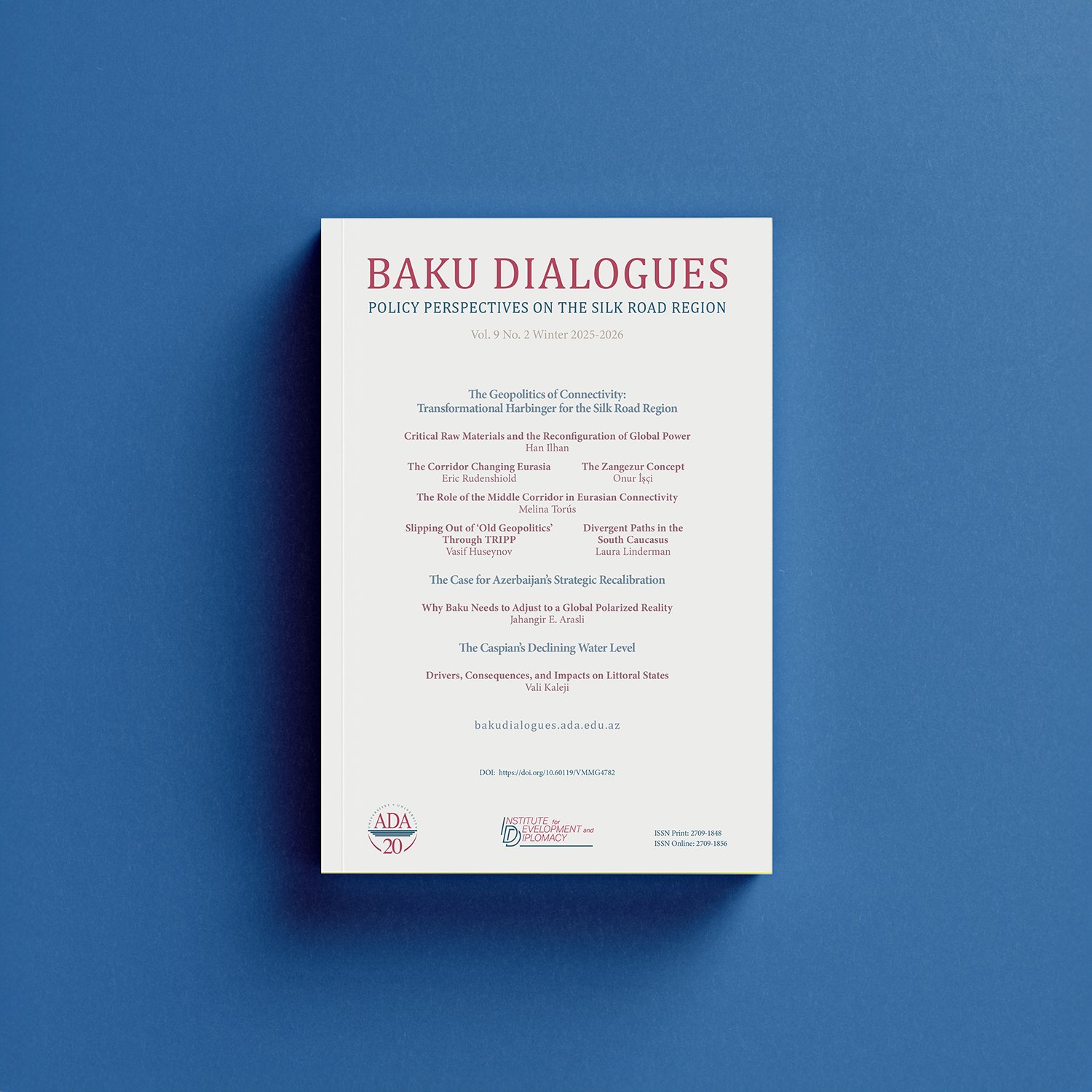
Trump’s ‘Business Diplomacy’ in the Caucasus
President Donald Trump’s approach to the Sharm el‑Sheik Middle East peace summit, ongoing efforts to bring some sort of end to the conflict over Ukraine, and various other anti‑war diplomatic initiatives share an underappreciated common denominator: “business diplomacy.”
Another geopolitical theater where this approach to conflict resolution is being tested is the Silk Road region. The question is this: Acting in this manner, can he bring about a long‑term, durable settlement of one of the disputes in the South Caucasus, leading to the normalization of relations between Armenia and Azerbaijan—a principal stumbling block to finalizing regional economic integration?
In other words, can Trump’s approach—which the Co‑Editor of Baku Dialogues, Damjan Krnjević Mišković, defines as a combination of “conflict resolution, peacemaking, transport and energy connectivity, commercial opportunities, and respect for everyone’s sovereignty”—succeed where decades of conventional diplomacy had failed?
This brings to mind a related question: In a region where the perpetuation of the causes of conflict is an important part of the toolkit of great power competition, will other major players who believe that they should have a voice and a veto in determining the shape of the regional architecture react negatively to U.S. efforts enough to derail what he has sought to achieve?
The 8 August 2025 deal signed between President Ilham Aliyev of Azerbaijan and Prime Minister Nikol Pashinyan of Armenia at the White House in Trump’s presence reflects one of the most audacious applications of Trump’s business diplomacy approach to ending the deadlock between Azerbaijan and Armenia. The centerpiece of the normalization agreement is to establish what the Armenian side was reportedly the first to call the Trump Route for International Peace and Prosperity (TRIPP) within the Zangezur Corridor that connects ‘mainland’ Azerbaijan with its Nakhchivan enclave across sovereign Armenian territory, allowing for a trade route to run from Türkiye to Central Asia. A separate bilateral agreement between Armenia and the United States will establish the legal framework for the U.S. to operate the corridor in a way that does not infringe on Armenian sovereignty whilst satisfying Azerbaijani requirements that TRIPP will ensure the unimpeded (or unobstructed) movement of Azerbaijani persons, vehicles, and cargo in both directions—to refer to language contained in Article 9 of the November 2020 ceasefire agreement between Armenia and Azerbaijan, which also called for the unblocking of all economic and transport connections across the region.
Can Trump’s ‘business diplomacy’ approach succeed where decades of conventional diplomacy had failed?
Yet efforts to move forward in various intergovernmental frameworks failed to make progress. Questions about territorial integrity, protecting sovereignty, and providing the necessary security guarantees to incentivize sufficient business investment were not satisfactorily resolved. The deal made at the White House attempts to move beyond these questions by harnessing the power of the private sector. Armenia will grant America exclusive development rights to the corridor, including the lease to the necessary real estate. In turn, the United States will sublease the corridor to a U.S.‑structured consortium of commercial firms that will operate the corridor within the parameters of Armenian law but will do so as an American entity to develop, manage, and operate the necessary rail and road links, commodity transport infrastructure, and communications networks. It is an effort, as Krnjević describes it, in “transforming a geopolitical bottleneck […] onto a commercial foundation.”
What is striking about TRIPP is the extent to which the linchpin of Armenia‑Azerbaijan normalization will be privatized. The United States government—as a government—makes no commitment of military force or security assistance to guarantee the corridor’s viability; there are no demilitarized zones or state monitoring of the commitments and obligations. Essentially, the U.S. government pledges only to use its powers, authorities, and tools of statecraft to midwife a private consortium upon whom responsibility for TRIPP will be bequeathed. The gamble is threefold: one, that an American private‑sector presence will be treated as a de facto U.S. official guarantee by the parties concerned; two, that an American private‑sector presence is a more palatable form of U.S. intervention for other major actors with interests in the region; and three, that a private consortium can generate the necessary security resources—including credible enforcement forces—to protect the new infrastructure.
What is striking about TRIPP is the extent to which the linchpin of Armenia‑Azerbaijan normalization will be privatized.
The Roots of Trump’s Business Diplomacy
Speaking at the Council on Foreign Relations in March 2025, America’s special envoy for Ukraine, General Keith Kellogg, described Trump’s assessment of “economics as the foundation and driving force behind international affairs.” In his telling, the Trump perspective is that commercial partnerships are what “underpin a security architecture” and that when there is a “direct invested interest” in a particular region, it can serve as a de facto guarantee.
Trump’s view of the superior utility of commercial approaches to conflict resolution begins with his own personal cognitive mindset. As a young Spain‑based scholar, Alberto Ferreres Fernández, describes it, the U.S. president views himself as the country’s “chief executive officer” and sees foreign policy in terms of corporate policy, developing a portfolio of partners for “America, Inc.” Trump and his team also have significant doubts as to the efficacy of “traditional” forms of diplomacy. The U.S. president views government bureaucrats as too rule‑bound, committed to following procedure rather than finding solutions, and prefers to rely on independent dealmakers and setting up ad hoc arrangements, rather than relying on formal structures. Indeed, a defining characteristic of the Trump Administration is the preference for personal friends and business associates to take the lead, as opposed to long‑serving federal employees.
Trump is especially skeptical of international organizations and their focus on process over results. In his 23 September 2025 address at the UN General Assembly, he called into question the purpose of various inter‑state institutions and derided the issuing of communiqués and demarches as “empty words” that “don’t solve wars.” Instead, he cited the penultimate example of his commercial diplomacy, the 2020 Abraham Accords, as an example of the “action” that is needed to bring about conflict resolution.
Trump’s approach is often described as a departure from a type of diplomacy grounded in appeals to shared norms and values, in favor of transactional deals—a description the U.S. administration has embraced. The U.S. president’s assessment is that paper commitments are not what bring about peace and stability; it is the incentivization of elites who stand to profit from a settlement (and who risk loss if the accord is subsequently undermined). The desire to secure benefits, not adhere to diplomatic norms, is what gives agreements their staying power, as Trump himself argued in his 13 May 2025 address to the U.S.‑Saudi Investment Forum in Riyadh.
The present American assumption is that acceptance of painful compromises can be smoothed over by demonstrating immediate gains from any agreement; this appeal to self‑interest is thus a better guarantor than requiring the United States to invest a great deal of its own resources in maintaining the arrangement. A defining characteristic of various Trump initiatives—the Abraham Accords, the Gaza peace plan, arrangements to support Ukraine, the Congo‑Rwanda peace deal, and the Armenia‑Azerbaijan summit— is the very limited role envisioned for the U.S. government. Instead, his preferred “peace model” is to incentivize the private sector to invest the necessary resources.
One of the key domestic political drivers for this is a growing reluctance on the part of Trump’s political base to endorse a broad, expansive role for the U.S. in global affairs at the expense of the U.S. taxpayer and with greater risk for the U.S. volunteer military. For the last decade, Republicans have increasingly expressed ambivalence about the efficacy of American military intervention and the costs of foreign policy activism. As Arta Moeini has assessed, the 2024 elections demonstrated that more Americans are reluctant to expend blood and treasure to “serve as the policeman of the world, […] extend security guarantees without limit, and launch interventions to remake societies in its image.” Part of the ongoing shift in focus of the Trump Administration, Moeini added in the same UnHeard article, “is ensuring U.S. competitiveness in the twenty‑first century through a project of national renewal. To remain a great power, Washington must urgently upgrade its infrastructure and manufacturing capacity, while creating regionally integrated supply chains for essential items like semiconductors, pharmaceuticals, and microchips.” U.S. national security is increasingly being redefined in terms of trade partnerships and the securing of supply chains, which can generate economic growth and geopolitical influence.
Beginning in his first term (2017‑2021), Trump demonstrated a readiness to turn to businesspeople to provide solutions to military and diplomatic problems—and, in particular, to explore private‑sector options that could limit the U.S. military's exposure to casualties. Increasingly, he seems more willing than his predecessors to consider the use of private sector contractors to provide security assistance and act as a deterrent to renewed conflict without the need for U.S. troop deployments. In other words, the U.S. government is willing to facilitate private firms to take the steps necessary to secure their investments, which will also serve U.S. national security interests.
The Abraham Accords reflect the apotheosis of Trump’s commercial vision: security and stability are guaranteed because regional partners are connected via “American economic and technological systems” that create incentives, especially for governing elites, to make the process work, in the judgment of Dan Diker, President of the Jerusalem Center for Public Affairs. The TRIPP proposal follows the advice of Samuel Doveri Vesterbye, the Managing Director of the European Neighbourhood Council, an EU‑funded think‑tank, who wrote several years ago that achieving a breakthrough in the South Caucasus “will likely require a strong economic incentive, which could be found in the spillover effects (supply‑chain hubs, economic growth, connectivity transit spillover, etc.) of a successfully implemented Middle Corridor connectivity strategy.”
TRIPP is meant to create such a golden river of profit and opportunity for all parties to be able to compensate for any losses they may experience as a result of agreeing to a peace settlement (and subsequent normalization) while raising the costs for any future attempts to undermine or undercut the arrangements. It also buttresses what a recent Asia Times article refers to as a Trump “transactional, resource‑focused diplomacy,” in which direct presidential‑level engagement creates the framework for U.S. firms to obtain access to critical minerals and other resources, as well as the necessary infrastructure partnerships to facilitate these corridors.
But this outsourcing to the private sector also changes the dynamic of U.S. involvement. Private security contractors do not constitute any sort of formal security guarantee along the lines of NATO’s Article 5. Nor will the presence of American corporations guarantee that the U.S. government will backstop any arrangements. This becomes especially important in that “deals” reached with the Trump Administration that are not formal treaties or even executive agreements will not necessarily bind or commit future U.S. administrations—and Trump is term‑limited to step down as of January 2029. The TRIPP gamble is that there will be a U.S. consortium in place by then, capable of managing and securing this Caucasus corridor—and this consortium will be seen as credible by all parties concerned.
The outsourcing to the private sector also changes the dynamic of U.S. involvement.
What About Other Stakeholders?
On September 1, 2025, by the joint request of both the Armenian and Azerbaijani governments, the OSCE “Minsk Group,” established in 1992 to try and facilitate a negotiated settlement to the Nagorno‑Karabakh conflict, was formally dissolved. In place of the “Co‑chair Troika” (Russia, France, and the United States), and the participation of other European states and Türkiye, the normalization of Armenia‑Azerbaijan relations is now solely (or at least primarily) under the aegis of the United States.
TRIPP represents the first major diplomatic initiative in the South Caucasus in which Russia plays no formal role as a mediator or guarantor. As such, it represents a major setback to Moscow’s efforts over the first quarter of the twenty‑first century to argue that solutions for the security and economic challenges of the South Caucasus should be developed and executed by the three Caucasian states under the guidance and management of Russia, Türkiye, and Iran with no need to involve “e x tra‑regional” powers such as the United States or the Europeans. This is known as the 3+3 model. From Moscow’s perspective, the conclusion of the Convention on the Legal Status of the Caspian Sea in 2018 demonstrated how the countries of the region could settle their differences without U.S. (and EU) involvement, and, as I argued in my book Russia’s Southern Strategy (2019), this approach has been Russia’s preferred template for regional dispute resolution. After the Second Karabakh War, Vladimir Putin and his foreign policy team assumed that Russia and Türkiye would jointly manage developments in the South Caucasus and that their cooperation meant that, in the words of Pavel Baev writing in the Georgetown Journal of International Affairs in early 2021, “the United States and the European Union have few levers for influencing the management” of the security situation.
TRIPP represents the first major diplomatic initiative in the South Caucasus in which Russia plays no formal role as a mediator or guarantor.
For its part, Iran was never part of the Minsk process and was often frozen out of regional deliberations. Despite significant policy differences, at times, with Moscow and Ankara, Tehran nevertheless embraced the idea of regional actors developing a regional security architecture without the involvement of the West. Building on a similar Turkish proposal, Tehran unveiled its version of the 3+3 model, which then‑Iranian foreign minister Javad Zarif described in January 2021 as a “six‑party cooperation union” for the region. Moreover, the Iranians hoped to rejuvenate transit corridors connecting the three Caucasian states with their vision of a Persian Gulf‑Black Sea Transit Corridor.
The TRIPP process provides for no formal role, voice, or veto for either Russia or Iran. It thus leaves the United States as the sole guarantor, supplanting the role Moscow had been playing since the 2020 ceasefire. It explicitly denies to Moscow any role in administering or securing the transit corridor, a role it had sought to obtain. It is also a de facto rejection of various forms of a 3+3 approach, which envisioned the formal, active involvement of not only Moscow and Tehran, but also Ankara, in managing regional infrastructure.
The TRIPP process provides for no formal role, voice, or veto for either Russia or Iran. It thus leaves the United States as the sole guarantor, supplanting the role Moscow had been playing since the 2020 ceasefire.
In theory, the dissolution of the Minsk Group also eliminates any official Turkish role in the peace process. Ankara, however, expects that the loss of any formal governmental role, whether through the Minsk Group or as part of its bilateral arrangements with Russia, will be recouped in two ways. First, by Turkish political leadership in pursuit of its “middle corridor strategy” in promoting what Vladimir Norov defined as a “shared vision among Turkic states to deepen regional integration, diversify transit routes, and strengthen their role in Eurasian logistics.” This is buttressed by a dramatically improved relationship with the United States in general, and with the Trump Administration in particular, which gives Ankara confidence it will be able to influence the development of TRIPP as a close, trusted partner.
Second, by the economic influence Turkish firms are expected to wield in the development and maintenance of a direct and unbroken land connection facilitated by TRIPP through Azerbaijan, across the Caspian, and into Central Asia. The Kars‑Iğdır‑Aralık‑Dilucu Railway Project (KIAD), for instance, is poised to connect to TRIPP and streamline cargo and passenger traffic, offering cost and time savings compared to other Silk Road region corridor routes, which will further spur growth in eastern Anatolia as a logistics and transport hub. While the TRIPP proposal has no formal role for Türkiye as a co‑guarantor, Ankara can expect that both its geopolitical and geoeconomic interests would be respected under any Trump initiative.
The dissolution of the Minsk Group also eliminates France’s role as a co‑chair, along with the largely symbolic positions of Germany, Finland, Sweden, and Italy as members. The challenge for EU countries, notably France, is whether the Trump Administration will try to align TRIPP with Armenia’s “Crossroads of Peace” initiative, which so far has gone nowhere, and connect TRIPP to the EU’s own “Global Gateway” program—and whether EU‑based firms will be awarded contracts as part of the new consortium.
But Global Gateway investments in other parts of the Middle Corridor would seem to ensure EU support for the TRIPP project, as the final link in a potentially secure supply chain for critical materials and energy for an EU free of Russian or Iranian involvement. In mid‑September 2025, EU Commissioner for Enlargement Marta Kos more or less confirmed this assessment in her public comments. In an interview with the Trend news agency upon her return to Brussels from Baku and Yerevan, she stated that her visit
was a first step in the broader strategy of connecting [the] EU towards the South Caucasus and further towards Asia via the Black Sea region. We want to reinforce ties with Azerbaijan by advancing mobility, energy and digital links, also looking towards Central Asia. The EU has a positive agenda for Azerbaijan: a concrete offer to boost economic development and sustainable growth. This offers significant economic, political and security benefits for Azerbaijan essential in the development of the Middle Corridor. In this regard, Azerbaijan is a key partner along the Trans‑Caspian Transport Corridor. […] Our [EU] vision is one rooted in our own experience in Europe. European cooperation became a success because we started to work in concrete areas of mutual interest between countries that had been historic foes. Transport and logistics could be those ingredients for relations between Azerbaijan and the EU, but also with the wider South Caucasus. Both sectors are crucial economic sectors with great political significance. For our business, but also for our citizens. […] A key element in the [peace] agreement [between Armenia and Azerbaijan initialed at the White House] is the commitment to enhanced connectivity. It will not only strengthen links within the region but also bring Europe closer to the South Caucasus and Central Asia.
During his joint press conference with Kos in Yerevan, Armenian Deputy Prime Minister Mher Grigoryan made this point explicit: the TRIPP proposal and the EU Global Gateway are “complementary to each other.”
China remains the dragon in the room. Unlike Moscow or Tehran, Beijing has never played an institutional role in conflict‑resolution efforts in the Caucasus. Yet China has reason to monitor developments very closely for several reasons.
China has not only been deepening its strategic footprint in Central Asia, but Beijing has also been quickly expanding it into the South Caucasus in recent years. This should be considered alongside what China’s top foreign policy official Wang Yi said at the February 2025 Munich Security Conference: “China is willing to synergize highquality Belt and Road cooperation with the European Union’s Global Gateway strategy, so as to empower each other and empower the entire world.
This statement gains salience when put alongside the fact that the TRIPP announcement was followed a month later by Poland’s decision to close the Małaszewicze crossing, used by the China‑Europe Railway Express. This rail link handles over 90 percent of freight traffic between China and the EU. The disruption, combined with ongoing issues along the maritime Silk Road and its chokepoints from the Straits of Malacca to the Red Sea, underscored the critical need for Chinese companies to have alternative routes to the EU (and Western Balkan and Turkish) markets. It also reinforced the belief that developing the Middle Corridor is vital to China’s geoeconomic interests. The disruption to the China‑Europe Railway Express, even if ultimately temporary, has further solidified China’s resolve to utilize routes that traverse the Silk Road region.
China is already investing heavily in developing the China‑Kyrgyzstan‑Uzbekistan (CKU) railway and various trans‑Caspian options. Still, for the Middle Corridor to succeed, China would prefer even more stability in the South Caucasus. Beijing has welcomed the peace process (but without crediting Trump’s role). In theory, a “fully operational TRIPP feeding reliably into the Middle Corridor […] could lower transportation costs and provide alternative routes for Chinese exporters,” as was put by Eka Khorbaladze, a young Georgian scholar based in Hong Kong writing for a Singapore‑based publication.
Yet China, along with Russia and Iran, remains understandably concerned about a vital transport corridor that would be under U.S. management (even in private hands). They accept as a given that a functioning TRIPP corridor will increase U.S. influence in the region—a development China feels it can manage and that Russia and Iran, due to recent setbacks (in Ukraine and as a result of the Twelve‑Days War, respectively), cannot prevent. Of particular concern to all three is whether the United States will leverage that influence to be able to regulate or even curtail their access to a key trade corridor and, beyond that, actively reshape the regional balance of power. That, in turn, will challenge whether a project developed under the rubric of “business diplomacy” can sustain the burdens of a new “Great Game” in the region. If TRIPP ends up functioning as announced, which in part means that their companies will be treated in accordance with the same criteria as companies from other countries, then all three are likely to be able to live with this new situation. More on this below.
Twisting and Turning
If Moscow (and Tehran) could turn the clock back to 2020— and implement some version of the Zangezur corridor proposals that were being advanced—they surely would. They recognize that the TRIPP “framework sidelines Moscow’s mediator role and inserts a U.S.‑backed operator into a critical artery on Iran’s northern flank, which Tehran publicly opposes. Brussels’ Global Gateway and ongoing connectivity loans further anchor a Western economic/security footprint,” as Nona Shahnazarian of Armenia’s National Academy of Sciences Institute for Archaeology and Ethnography argued in a recent interview for the Astana Times.
On the other hand, Pashinyan indicated in a Fox News interview that aired shortly after the White House summit that he believes both Russia and Iran could also benefit from access to TRIPP, which connects via Azerbaijan to the International North‑South Transport Corridor (INSTC) and gives Iran access to the Black Sea. Indeed, Pashinyan went so far as to predict that “this project could become a good opportunity for economic cooperation to begin between Iran and the U.S., and between Russia and the United States.” He has repeated this argument numerous times since then, including in the presence of Iranian and Russian leaders and officials.
A critical problem is that Pashinyan’s comments about the purpose of TRIPP are contradicted by other U.S. policymakers, albeit none who are part of the Trump Administration (in the sense of serving in the executive branch). From Trump‑allied legislators, however, such as Senator Chris Daines (R‑Montana), we have heard statements that TRIPP is designed to bypass Russia, China, and Iran, reduce their influence, and allow regional states, especially Armenia, to reorient to the West, particularly in the context of energy supply. A number of commentators anticipate that the TRIPP plan will leave Washington in a strategically advantageous position vis‑à‑vis Russia and Iran, and, as one has put it, TRIPP could “counter, if not curb, China’s influence in Central Asia.”
Therefore, one of the problems in assessing how TRIPP will be received and whether it will promote peaceful integration or draw the South Caucasus even more into an intensifying rivalry between Russia and China, on one hand, and the West (the EU and the United States) on the other, arises because there are two variants of conceptualizing the geopolitical and geoeconomic role of TRIPP. The first is to see the corridor as a minimalist geoeconomic hedge that gives the regional states more leverage vis‑à‑vis Russia and Iran while also guaranteeing that at least some of the Silk Road region’s trade with the West—particularly critical minerals and energy— does not flow via conduits that Moscow or Tehran can shut down. Indeed, U.S. strategy since 1991 has sought to ensure, as the Center for the National Interest’s Elvira Aidarkhanova has written, “access to resources […] and supporting transcontinental trade routes” by having alternatives to corridors that flow through Iran and Russia.
The second is to see TRIPP as a maximalist geopolitical project designed to fundamentally reshape the balance of power within the region, effectively expel Russian and Iranian influence, and provide an exclusionary alternative to China’s Belt and Road Initiative (BRI). In this iteration, TRIPP becomes the conduit to funnel not simply Western investment but American power, including, ultimately, military force, to integrate the region into the Euro‑Atlantic world fully, and in so doing, contain Iran, isolate Russia, and block BRI expansion.
TRIPP, as of this moment, has only been depicted in very broad strokes. As the fine print is developed, the choice moving forward is, as Charhar Institute Research Fellow Hao Non concludes in an incisive article in The Diplomat, whether “to make the corridor a shared economic lifeline rather than an exclusive Western asset.” All the core countries of the Silk Road region, including Armenia and Azerbaijan, would clearly prefer the former.
Chinese firms—and the Chinese government—have adopted a waitand‑see approach. If TRIPP is likely to produce the sort of stability in the region that benefits their interests and will facilitate their trade and investment strategy, they will not oppose it. If TRIPP becomes exclusionary to Chinese interests, Beijing will continue to pursue alternative projects throughout the region while also maintaining other hedges against the possibility of Euro‑Atlantic management of the western termini of the Middle Corridor, including the development of the Northern Sea Route or redirecting flows along the Middle Corridor to bypass TRIPP. As one Chinese analyst concluded, China has no choice but to discover ways to leverage “this new multi‑corridor landscape” as it is “essential for future competitiveness.”
For its part, Iran at this point can vocally demonstrate its displeasure but has little wherewithal to derail the TRIPP project, particularly as Tehran attempts to salvage its position in the Middle East in the aftermath of the collapse of its Shia Crescent strategy and the impact of U.S. and Israeli strikes on its nuclear program.
Ultimately, the only state that could credibly serve as the principal spoiler to TRIPP is the Russian Federation, but this does not necessarily mean that it will want to play that role. Moscow is well aware that in its currently weakened condition, it cannot take steps to preserve its pole position on connectivity in the Silk Road region. The Kremlin cannot prevent projects like TRIPP or Global Gateway from moving forward and does not want to disrupt relations with the states of the Silk Road region, especially Azerbaijan.
Ultimately, the only state that could credibly serve as the principal spoiler to TRIPP is the Russian Federation, but this does not necessarily mean that it will want to play that role.
Indeed, events of the last several years have demonstrated that Moscow is willing to accept a loss of influence as long as core interests are respected, especially the need for alternate partners to be able to cope with U.S. and EU sanctions imposed after the resumption of full‑scale military activities in Ukraine in 2022. This means that Russia needs the core states of the Silk Road region to serve as one of its “windows” to the global trading system and financial ecosystem, as I argued in the summer 2024 edition of Baku Dialogues. Thus, the Russian government, in responding to TRIPP, is guided by the logic of what Daria Isachenko has labeled (also in an article published in this journal) “manageable interference”— as long as that Western “interference” does not attempt to board up Moscow’s increasingly vital southern Silk Road region “window.” Thus, if TRIPP is largely guided by the first variant (as described above), Moscow will seek to complement its development alongside its own Silk Road region plans and strategies.
Moscow has learned, by trial and error, how to pragmatically adjust when its preferences are not met; it has also now understood that the core states of the Silk Road region, as well as Türkiye, have the wherewithal to bargain with Russia and even impose conditions that the Kremlin may not like but can learn to live with. Moscow has reached an equilibrium with Azerbaijan and a modus vivendi with Georgia. Currently, Russia is adjusting to an Armenia that seeks to rebalance its relationship with Moscow, in part because of a sense in Yerevan that a close military and economic relationship with Russia is no longer a guarantor of its security and prosperity while complicating its efforts to pursue closer relations with the European Union and the United States.
Some commentators believe that the TRIPP proposal offers Armenia a chance to sever its connections to Moscow decisively. Such comments are read with concern by Russian analysts who remain apprehensive that the West will treat the South Caucasus as a zero‑sum game. Russian experts have never closed the door on the possibility, as I noted last year for a monograph published by the German Institute for International and Security Affairs (SWP), that a “Western‑sponsored peace deal between Armenia and Azerbaijan and the conclusion of a lasting rapprochement between Türkiye and Armenia would reduce the need for a Russian role.” The continuation of this line of thinking leads to a conclusion that Moscow could face the risk of being excluded not only from the operations of, but even access to, the Middle Corridor. It also unnerves some in the Kremlin how much Russia must now trust that Ankara and Baku will respect its core equities. That being said, neither Azerbaijan nor Türkiye has, so far, shown a willingness not to reach reasonable accommodations with Russia. What has changed is the balance of power between each of them and Moscow.
If U.S. engagement via TRIPP, therefore, is an effort to promote the second option—i.e., the complete exclusion of Russia from the region—then Moscow will oppose this via any means necessary. Even with the damage done to Russian power as a result of the campaign in Ukraine, Moscow still has potential for reconstitution of its military power and retains significant tools of hybrid warfare that can be used to disrupt the TRIPP project. There are indications that the Russians are seeking assurances from Washington that the U.S. will not use this project as a way to block Russia’s access to global markets and that there will be no deployments of U.S. military or intelligence personnel to the TRIPP corridor—a topic I wrote about in the run‑up to the Anchorage Summit in National Security Journal. The critical question is whether the regional states, starting with Azerbaijan (as well as Türkiye), will also endorse such a request. Again, it seems to me that no country in that part of the world is interested in pursuing a course of action that would eliminate the “Russian factor,” in part because doing so would result in the sort of strategic antagonism that would serve none of their national interests.
The Fate of a Multipolar Approach
For the past two decades, as Russian power resurged after the tumultuous collapse of the 1990s—and as the West demonstrated the limits of its willingness to use its own tools of statecraft to confront and contain Moscow (especially after the disaster of the 2008 Georgia war)—the core states of the Silk Road region have generally found a way to accommodate Russian concerns, including, most recently, Georgia.
Rather than be caught in the vicissitudes of great power competition, most governments in the region have adopted some version of what I have called an “interest‑based multipolarity” and taken up a posture of what Krnjević has termed “strategic transactionalism” in which no major outside actor is wholly excluded from regional initiatives. The bargain has been to recognize Russian equities in such projects in return for Russian guarantees not to disrupt their operations.
What has transpired is that, alongside the overall Middle Corridor project—where both Western and non‑Western (read: Chinese, but also GCC and Turkish) investment has been solicited—the states of the region accommodated Russian interests regarding the status of the Caspian Sea and the development of the INSTC. Moreover, countries like Azerbaijan see benefit in linking together and connecting complementary projects (e.g., INSTC with BRI). This also gives regional states more options to utilize all possible corridors, including those via Iran and Russia.
Despite the optics of the White House summit, it seems that, for the time being, regional leaders are hesitant to exclude Russia entirely. Two months after the historic meeting at the White House, Aliyev met with Putin on the sidelines of the CIS summit in Dushanbe, itself a reminder that Russia still has equities and capabilities in the Silk Road region. The Dushanbe bilateral (one media report called a meeting to “bury the hatchet”) reaffirmed that the basis of the Russia‑Azerbaijan relationship remains rooted in “cold calculation” driven by “political pragmatism” and national interest, as Russian journalist Aleksandr Klement put it in Vestnik Kavkaza. He added that
both perceive interstate relations from a position of equals, where respect should not be declared, but proved by actions. Putin sees Aliyev not as a junior partner, but a leader who cannot be ignored. Aliyev sees in Putin not an enemy, but a person with whom you can speak in the language of calculation.
Russia’s strategic leverage in the region, even if diminished, was acknowledged, while Azerbaijan obtained political assurances for its regional partnerships. For Russia, it reflects a push to retain strategic leverage in the South Caucasus as its attention remains divided by the war in Ukraine.
Yet the assessment of the desirability of an “interest‑based multipolar” approach rests on two factors. The first is whether there is an ongoing erosion of Russian power and capabilities due to the prosecution of its special military operation in Ukraine and continued Western pressure on its economy. The second is a change in the commitment of both the EU and the United States to more energetically pursue a South Caucasus strategy. Either—or both—could change the desirability of having to accommodate Russia.
This creates a real conundrum for the Trump Administration: the more TRIPP is portrayed as a geopolitical game‑changer intended to eliminate Russian influence in the South Caucasus, the more Moscow will be incentivized to interfere. This, in turn, may raise the geopolitical risk for investors far beyond their comfort zone in the absence of well‑defined, concrete security guarantees from the U.S. government. Think tank pundits and Western politicians can wax grandiose about what TRIPP is meant to achieve on the regional geopolitical chessboard, but the project’s success ultimately rests on what businessmen and financiers are prepared to commit and what regional leaders are prepared to accept.
The more TRIPP is portrayed as a geopolitical game‑changer intended to eliminate Russian influence in the South Caucasus, the more Moscow will be incentivized to interfere.
The signals from the Trump national security team suggest that the administration will continue to shift its focus away from the European theater and will expect that other partners will assume more of the security burden in areas “considered secondary by Washington”—which would include the Silk Road region in general and the South Caucasus in particular. It appears unlikely that, as the Trump Administration continues to rebalance its security resources toward Asia and the Western Hemisphere, it will be prepared to undertake a major new U.S. government commitment for the South Caucasus.
Yet it would be a mistake to see anything but the maximalist approach as a defeat. Even the more minimalist approach to TRIPP would nevertheless still result in important geoeconomic results for the West. A functioning TRIPP as part of the Middle Corridor ensures that energy and critical resources, especially minerals, can be sourced from the region and reach European and American consumers. The EU’s Critical Raw Materials Act targets and America’s C5+1 Critical Minerals Dialogue both rest, at the end of the day, on the ability of Western firms to access, process, and ship the ores, raw materials, and components that are vital to the development of Fourth Industrial Revolution technologies without being interrupted by possible Chinese, Russian, or Iranian bottlenecks. The only realistic way to do that is via the Middle Corridor, which requires buy‑in (and thus provides leverage to) the three South Caucasus states, particularly Azerbaijan (for basic reasons of geography).
The minimalist/maximalist conundrum also bedevils the core states of the Silk Road region itself. The willingness to really challenge Russia (and also China) is directly connected to the degree of support and iron‑clad guarantees from the United States and the European Union. In the months since TRIPP was announced, the impression is that the U.S. role can strengthen their respective negotiating positions with regard to Russia and China, but falls short of being able to completely displace either power from regional affairs, as Carnegie’s Temur Umarov has noted.
In addition, given that Russia and China are “near” while the U.S. is much more distant (and, to a lesser but important extent the EU), regional states are unlikely to fully gamble their respective futures on what they suspect may ultimately be unreliable actors—or, as one commentator based in the Silk Road region told me recently, “fair‑weather friends.” The EU has the additional problem of still wanting to impose a normative framework on its overall strategy toward the countries of the Silk Road region, which could end up imposing conditions unacceptable to regional governments for its assistance.
The foregoing is one of the reasons given for the so far relatively mild response from Moscow to what many have characterized as a major geopolitical setback for Russia: the Russian foreign policy establishment believes that the TRIPP paradigm will short‑circuit. Putin, who continues to praise his relationship with Trump, may not want to draw his ire by taking active measures against a Trump initiative that may still end up being stillborn—and thereby complicate his relationships with Armenia, Azerbaijan, Türkiye, and other regional states.
After all, another “business diplomacy” deal—the June 2025 framework between the Democratic Republic of the Congo and Rwanda—was heralded as a similar game‑changer. Yet the consensus assessment now is that the United States underestimated the depth and complexity of the challenges of making the Congo‑Rwanda strategic minerals corridor agreement work. Efforts to flesh out the details and bring the initial framework to fruition have been delayed—and there are concerns that Trump himself will have to become personally reinvolved in the process to ensure progress.
In terms of the South Caucasus, Senior Research Fellow at Clingendael’s Security Unit, Marina Ohanjanyan, has expressed concern that “whether a sufficient level of U.S. attention and effort will remain in this region for a sufficiently long period of time to ensure the conclusion of the peace deal and implementation.” As Vusal Guliyev, writing in the Fall 2022 edition of Baku Dialogues, has assessed regarding the Middle Corridor (and which applies to TRIPP) to fulfill its potential, it “will depend on the future political commitment of regional actors” to continue developing the necessary infrastructure.
Beyond the staying power question, because Trump prefers to use informal channels and rely on a small network of close trusted friends and advisors, he has demonstrated that, as Natalia Tsvetkova wrote in early September 2025, he can take “quick and unconventional steps” but his ability to “dock” the results of his personalized diplomacy to both domestic and international institutions to take over and handle the day‑to‑day challenges is quite limited. How the legal, commercial, and security infrastructure that will govern the TRIPP corridor's operations—and resolve inevitable disputes and disagreements—will be established and ratified remains unclear: as of this writing, American and Armenian officials are still negotiating the details. The TRIPP process is a stress test of the staying power of a Trump approach that prioritizes deal‑making over institution‑building.
The TRIPP process is a stress test of the staying power of a Trump approach that prioritizes deal‑making over institution‑building.
After the excitement fades, the hard work begins. TRIPP rests on the gamble that the U.S. private sector can be incentivized and empowered to take up the challenge of ensuring that a corridor in a tense geopolitical region remains open for business and guarantees continuity of operations “even in times of tension,” as Hao Non points out.
Whether TRIPP, as an Americansponsored corridor—but without hard or traditional U.S. security guarantees—provides a sufficient insurance policy of U.S. commitment for Europeans, Turks, and Caucasians alike to move ahead with this project, but without crossing red lines for Russia, Iran, and China, is difficult to assess. In turn, will Moscow, Tehran, and Beijing accept a distinction between U.S. “management” of TRIPP versus U.S. “control”?
How these questions are answered will determine whether TRIPP validates a business diplomacy approach—and possibly provides a model for other conflict zones, including in the Middle East—or becomes another interesting proposal discarded on the ash heap of good intentions. However, given that 30 years of “traditional diplomacy” failed to make any lasting progress in bringing peace to the South Caucasus, an appeal to commercial self‑interest seems to have had much more initial success. If a business mindset prevails over geopolitical thinking, then the promise of TRIPP to solidify around mutual geoeconomic benefit for all participants might in fact be realized.